
Why OLAPLEX Is the Original & Best Bond Builder for Hair Repair

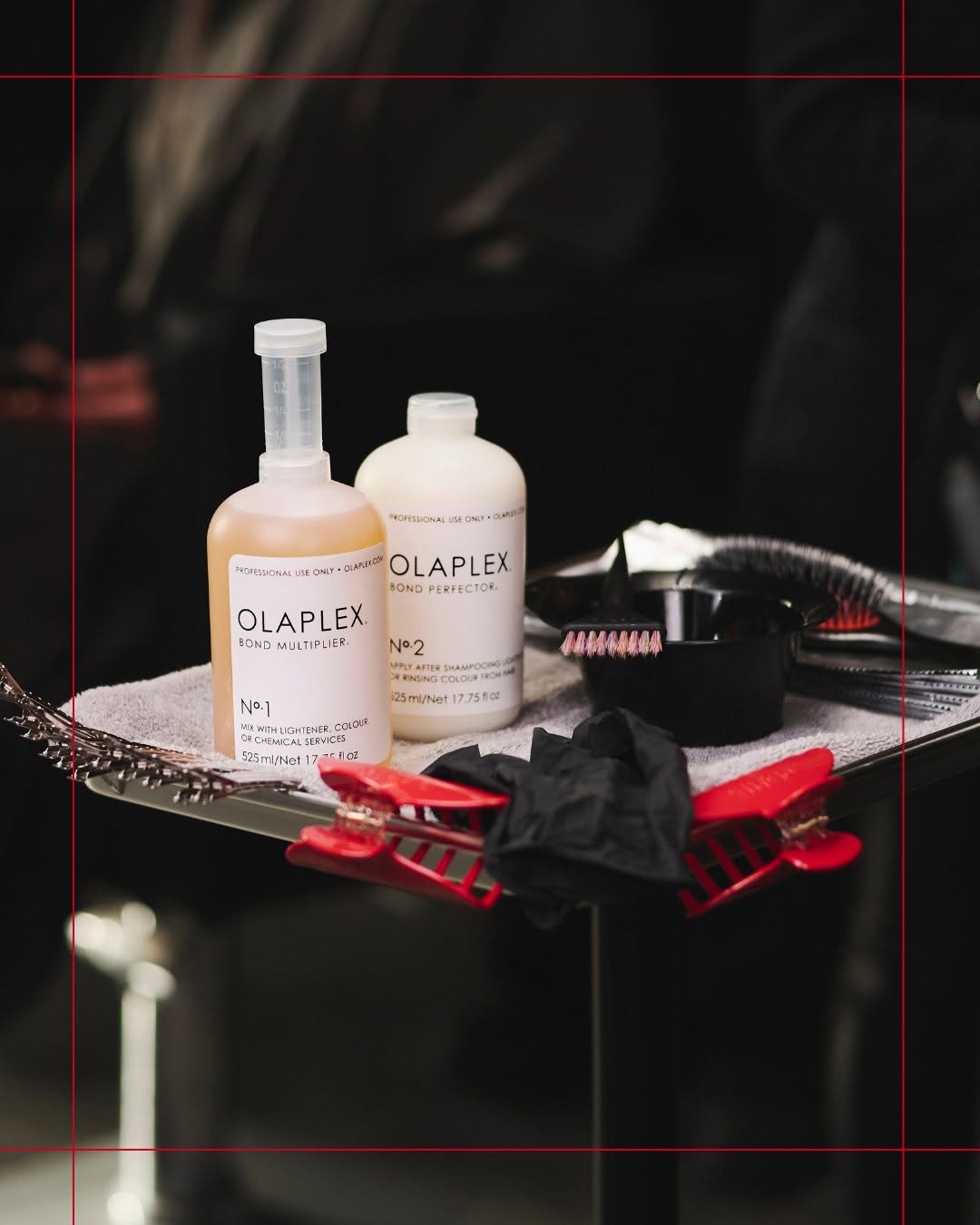
OLAPLEX Bond Builder: Is the Original Still the Best for Hair Repair?
OLAPLEX bond builder technology changed the way hair professionals approach damage. Instead of relying only on conditioners and masks to make compromised hair feel smoother, OLAPLEX introduced salons to a treatment designed to support the bonds that help give each strand its structure.
That influence is difficult to dispute. OLAPLEX says it founded the prestige bond-building category in 2014, and the brand’s professional system became closely associated with colour correction, blonding and damage-conscious chemical services. Today, however, “bond repair” appears on everything from salon treatments to supermarket shampoos. Clients reasonably want to know whether the original still deserves its reputation—and its premium price.
Our answer is nuanced. There is no independently established “best bond builder” for every person, hair type and budget. Different formulas use different technologies and cannot be compared from the phrase bond repair alone. But OLAPLEX remains a compelling benchmark because it has a distinct patented technology, a system created around professional services, more than a decade of category experience and a practical bridge between salon and home care.
Here is what the OLAPLEX bond builder does, where it fits in a healthy-hair routine and what it cannot promise.
The short answer: OLAPLEX is one of the strongest choices for clients whose hair is regularly coloured, lightened, heat styled or mechanically stressed. It is not a cure for every hair concern, and it cannot make severely compromised ends new again. The best result starts with an accurate diagnosis and realistic expectations.
What is a bond builder?
Hair is largely made from keratin. Within that structure, several types of chemical interaction help provide strength, shape and stability. Disulphide bonds are especially important because chemical services can disrupt them. Bleach, permanent colour, relaxers and perms may change the fibre, while heat, ultraviolet exposure, brushing and everyday friction can add to visible wear.
Damage does not always present in the same way. It may look or feel like:
- increased breakage;
- roughness and tangling;
- excessive porosity;
- reduced elasticity;
- dullness or frizz;
- weakened ends; or
- difficulty retaining length.
A bond-building product is formulated to address part of this internal damage story. That makes it different from a standard conditioner, which primarily improves lubrication, softness, detangling and surface feel. Both can be useful. They simply do different jobs, and a good routine may include both.
“Bond builder” is not a single standardised formula. Brands may use maleate chemistry, acids, peptides, proteins, polymers or combinations of ingredients, with different mechanisms and levels of evidence. Two products can carry similar marketing language without being interchangeable.
Why is OLAPLEX called the original bond builder?
OLAPLEX launched in 2014 and describes itself as the creator of the prestige bond-building category. Its arrival mattered because the professional products were built to work alongside chemical services as well as in a standalone treatment. This gave colourists a new way to think about maintaining hair integrity during ambitious transformations.
At the centre of the original technology is Bis-Aminopropyl Diglycol Dimaleate. You will see this name in the ingredient lists of relevant OLAPLEX products. The company maintains a published patent portfolio, and its professional No.1 and No.2 system remains a defining part of the brand’s heritage.
Calling OLAPLEX “the original” is therefore a reasonable description of its category-making role—not a claim that nobody had ever researched hair crosslinking before it. “Best” is more subjective. Longevity, professional adoption and intellectual property make OLAPLEX an important benchmark, but the best treatment for an individual still depends on their hair, service history, routine, sensitivities and budget.
How does the OLAPLEX bond builder work?
OLAPLEX says its patented bond-building technology acts at a molecular level to rebuild disulphide bonds. Its newer Complete Bond Technology language also refers to three bond types across the cortex and cuticle. In plain English, the system is intended to strengthen compromised hair structure rather than provide surface conditioning alone.
It is important to describe that claim accurately. Hair outside the scalp is a non-living fibre. Cosmetic “repair” means improving the condition, structure, strength or appearance of damaged fibre; it does not mean biologically healing hair. No treatment can turn a split end back into untouched virgin hair, and a severely degraded strand may still need to be cut.
The visible result will also reflect the whole formula. Conditioning agents can improve slip and softness, while styling ingredients can affect shine and frizz. The named bond-building ingredient is important, but it should not be treated as the only reason a finished product feels good.
For transparency, much of the easily accessible product-performance evidence is supplied by OLAPLEX itself. The brand describes its technology as clinically tested, while individual product pages state the test conditions for headline results. Those claims are useful, but they are not the same as a large body of independent, peer-reviewed head-to-head trials showing that OLAPLEX outperforms every competitor.
Why OLAPLEX remains a leading choice for damaged hair
1. It began with the professional service
OLAPLEX was not simply a retail mask with scientific language added to the packaging. The professional two-part system was designed around salon work.
- Nº.1 Bond Multiplier can be used by trained professionals as an additive in compatible chemical services or as the first stage of a standalone treatment.
- Nº.2 Bond Perfector follows as the second professional stage and should be used according to the brand’s service instructions.
This matters for clients having highlights, balayage, bleach or a major colour correction. The stylist can integrate bond support into a carefully planned service instead of treating damage only after the appointment.
It does not make unlimited lightening safe. Bond builders do not replace consultation, strand testing, correct developer selection, controlled processing, conservative goals or the professional judgement to stop. Hair condition must always set the limit.
2. The technology has a clear identity
Many products promise stronger hair, but they do not necessarily work in the same way. OLAPLEX’s ingredient and patent story is unusually recognisable. That does not automatically make every OLAPLEX product superior to every alternative; it does give consumers and professionals a more specific basis for evaluating the claim than the generic words “repair shampoo”.
3. The salon and home routines connect
The professional system supports the chemical-service stage, while home products help clients maintain a consistent routine between visits. This continuity is one reason OLAPLEX became more than a one-off salon add-on.
The current UK hero treatment is N°.3PLUS Complete Repair Treatment, which replaced the older No.3 Hair Perfector formula. OLAPLEX instructs users to apply N°.3PLUS generously to wet hair before shampooing, leave it for three minutes, rinse, then shampoo and condition. The brand recommends using it every one to three washes and says it is protein-free and colour-safe.
OLAPLEX reports that N°.3PLUS produces hair that is three times stronger after four uses and three times softer than bleached hair. These are manufacturer test claims with stated conditions, not a guarantee that every user will experience an identical result.
4. It works across hair types—but routines should still be personalised
Damage can affect straight, wavy, curly and coily hair, as well as fine and coarse fibres. OLAPLEX markets N°.3PLUS for all hair types. Yet “suitable for all hair types” should never become “everyone needs the same routine”.
Fine hair may need lighter conditioning. Highly textured or very dry hair may need more moisture and lubrication. Hair that feels brittle could be affected by chemical damage, heat, hard water, product build-up or several factors at once. A stylist can distinguish between structural damage and a routine that simply lacks moisture or appropriate cleansing.
5. It can help with length retention, not hair growth
If a routine reduces breakage, more of the existing hair length may remain intact. That is length retention, not faster growth from the follicle. The OLAPLEX bond builder is a cosmetic hair-fibre treatment; it is not a treatment for hair loss or a scalp disorder.
Anyone experiencing sudden shedding, bald patches, scalp pain or persistent irritation should seek advice from an appropriate healthcare professional rather than relying on a bond-building product.
OLAPLEX vs a conditioner, mask or protein treatment
These categories overlap in the benefits a user can feel, but they are not identical.
| Product type | Main role | Useful when | What it cannot do alone |
|---|---|---|---|
| OLAPLEX bond builder | Supports compromised hair bonds and strength | Colour, bleach, heat or mechanical damage | Replace every moisture, cleansing or styling product |
| Conditioner | Improves slip, softness and detangling | Most wash routines | Reverse severe structural damage |
| Moisture mask | Adds intensive conditioning and improves feel | Dry, rough or difficult-to-manage hair | Guarantee bond repair |
| Protein treatment | Temporarily reinforces or improves the feel of some damaged hair | Selected porous or weakened hair | Suit every head of hair or provide the same chemistry as OLAPLEX |
| Haircut | Removes split, thin or irreversibly compromised ends | Breakage, splitting and loss of shape | Repair the remaining fibre by itself |
This is why “OLAPLEX or conditioner?” is usually the wrong question. A bond treatment and a well-chosen conditioner can complement one another. N°.3PLUS is a pre-shampoo treatment, not a replacement for shampoo and conditioner.
Who is the OLAPLEX bond builder best suited to?
It may be especially useful for people who:
- bleach, highlight or balayage their hair;
- have repeated permanent colour services;
- use straighteners, curling tools or high heat frequently;
- notice breakage after chemical or mechanical stress;
- are preparing for a carefully managed colour transformation;
- want to maintain the condition of longer hair; or
- prefer a professional system with compatible home care.
Virgin or minimally styled hair can still experience environmental and mechanical wear, but that does not mean every person needs an intensive bond routine. If the hair already feels healthy and manageable, a simpler routine may be enough.
When OLAPLEX is not the whole answer
Honest recommendations build more trust than miracle language. OLAPLEX may improve the strength and feel of damaged hair, but it cannot:
- fuse split ends permanently;
- restore hair that has been chemically destroyed;
- make an unsafe bleaching plan safe;
- replace sufficient conditioning and heat protection;
- treat medical hair loss or scalp disease; or
- guarantee the same result for every user.
If wet hair stretches excessively, feels gummy, snaps with little tension or cannot pass a strand test, the safest plan may be to delay the chemical service. A bond builder is a support tool, not permission to ignore the warning signs.
How to use OLAPLEX at home
Always follow the current instructions on the product you own, because formulas and directions change. For the current UK N°.3PLUS treatment:
- Wet the hair in the shower.
- Apply generously from roots to ends before shampooing.
- Leave for three minutes.
- Rinse thoroughly.
- Shampoo and condition.
- Repeat every one to three washes, adjusting the wider routine to your hair’s needs.
Nº.0 Intensive Bond Building Treatment can be used before N°.3PLUS for a more intensive routine. OLAPLEX currently instructs users to apply Nº.0 to dry hair, leave it for ten minutes without rinsing, apply N°.3PLUS, leave for a further ten minutes, then rinse, shampoo and condition.
Do not improvise professional chemical-service ratios at home. Nº.1 and Nº.2 are professional products, and chemical services should follow the manufacturer’s current technical guidance.
Can you use OLAPLEX too often?
OLAPLEX says N°.3PLUS cannot “over-bond” hair and permits frequent use. Even so, more product is not automatically more benefit. A routine can become poorly balanced if it neglects cleansing, moisture, scalp needs or the characteristics of the individual’s hair.
If hair starts to feel coated, heavy, dry or difficult to style, pause and assess the complete routine rather than assuming one dramatic cause. Check how much product is being applied, how thoroughly it is rinsed, whether styling products are building up and whether the hair needs a different level of conditioning. Persistent breakage deserves a professional assessment.
How to buy genuine OLAPLEX
Premium professional products can be targets for diversion and counterfeiting. Buy from OLAPLEX directly, an authorised salon or a retailer the brand recognises. Be cautious if the price is implausibly low, the packaging looks inconsistent, batch information is missing or the seller cannot explain its supply chain.
For HairUncut, this is also an editorial and commercial trust point: only link to a verified product page, keep the price and stock status current, and clearly label any affiliate relationship or paid partnership.
Is OLAPLEX worth the money?
For frequently lightened, coloured or heat-stressed hair, OLAPLEX can be a worthwhile part of a damage-conscious plan. Its strongest case is the complete ecosystem: professional service support, recognisable patented technology and practical home maintenance.
It may offer less value to someone whose hair is healthy, rarely processed and already performs well with a straightforward shampoo-and-conditioner routine. It is also possible for a different well-formulated treatment to suit an individual better. Premium price should buy an appropriate solution, not an automatic place in every bathroom.
The most useful question is not “Is OLAPLEX the best?” in isolation. Ask: What is causing my hair concern, which result do I want, and where does a bond builder fit in the plan?
The HairUncut verdict
The OLAPLEX bond builder remains one of the defining technologies in professional hair repair. OLAPLEX helped establish the category, continues to publish a patent portfolio and offers a system that connects colour services with home maintenance. Those are meaningful reasons for its enduring reputation.
But credibility matters. OLAPLEX is not a magic shield, and “best” cannot be universal. Healthy colour work still depends on diagnosis, technique, realistic lift, appropriate aftercare and knowing when not to proceed. Used correctly and for the right client, OLAPLEX remains a leading choice for helping damaged hair feel stronger, softer and more manageable.
If your hair is breaking, over-processed or preparing for a major colour change, book a professional consultation before choosing a treatment. A stylist can assess the condition of the hair, explain what is achievable and build an OLAPLEX plan around your actual needs.
Frequently asked questions
What does the OLAPLEX bond builder do?
OLAPLEX says its patented technology targets and rebuilds bonds that contribute to hair strength and structure. In cosmetic terms, it is designed to improve the condition and resilience of damaged hair; it does not biologically heal hair.
Is OLAPLEX the original bond builder?
OLAPLEX describes itself as the original prestige bond builder and says it created the category when it launched in 2014. Its early professional system and patented technology played a major role in popularising bond repair in salons.
Is OLAPLEX the best bond builder?
It is a leading and well-established option, but “best” depends on hair condition, goals, sensitivities, routine and budget. There is not enough independent head-to-head evidence to declare one product universally superior to every alternative.
Is OLAPLEX good for bleached hair?
Bleached hair is a core use case because lightening can compromise hair structure. A trained colourist can use the professional system within an appropriate service, while home care can support the routine between appointments. It does not remove the need for strand tests or conservative processing.
Has OLAPLEX No.3 changed?
Yes. In the UK, the current treatment is N°.3PLUS Complete Repair Treatment. It is used on wet hair before shampooing for three minutes. Check the directions on your own packaging rather than following an older online routine.
Is OLAPLEX a protein treatment?
No. OLAPLEX states that N°.3PLUS is protein-free and distinguishes its bond-building technology from protein treatments. Check each product’s current ingredient list if you have an allergy or specific ingredient concern.
Can OLAPLEX fix split ends?
It may improve the appearance and feel of damaged ends, but no cosmetic treatment permanently rejoins a split end. Trimming is the reliable way to remove splitting.
Does OLAPLEX make hair grow?
It is not a hair-growth treatment. If it helps reduce breakage, a person may retain more length, but that is different from increasing growth at the scalp.
Can I leave N°.3PLUS on overnight?
OLAPLEX says there is no need. The current product is designed as a three-minute pre-shampoo treatment, so follow the label instructions.
Can OLAPLEX damage hair?
Cosmetics can cause an unwanted reaction in some users, and an unsuitable overall routine may leave hair feeling less manageable. Stop use if irritation or another adverse reaction occurs and seek appropriate advice. For routine concerns, ask a stylist to assess the hair and the full product mix.