Hairdresser Ergonomics: How to Protect Your Body and Your Career


Hairdresser ergonomics is not simply a reminder to stand straighter. It is the practical design of tools, workstations, techniques, appointments and working patterns around the people using them.
Hairdressing can involve long periods of standing, repeated arm movements, raised shoulders, twisting, gripping, reaching, blow-dryer weight, shampooing positions and moving stock or equipment. When those demands are combined with a packed diary and limited recovery time, discomfort can become normalised.
It should not be.
Pain is not evidence of commitment, popularity or technical excellence. It is information that deserves attention. A salon that relies on people working through symptoms may protect today’s column while weakening the person’s ability to work tomorrow.
This guide helps UK salon owners, managers, employed stylists and freelancers examine work-related physical strain. It provides general information rather than individual medical, occupational-health or physiotherapy advice.
What does ergonomics mean in a salon?
Ergonomics means fitting the work to the worker where reasonably possible. In a salon, that includes:
- the height and position of the client;
- where tools and products are stored;
- how far the stylist reaches;
- how long one movement or posture is sustained;
- the weight and balance of equipment;
- the sequence of services in the diary;
- opportunities to change position and recover;
- lighting, space and floor conditions;
- training and supervision;
- individual needs and adjustments.
There is no single perfect posture that can be held all day. The body benefits from movement and variation. The objective is to reduce repeated or sustained exposure to awkward positions and excessive force—not turn stylists into statues.
Why hairdressers experience physical strain
HSE guidance identifies several factors relevant to musculoskeletal disorders, including bending, twisting, reaching, repetitive actions, sustained force, long task duration, fatigue, poor work organisation and insufficient breaks.
Hairdressing can combine several of them in one appointment.
Cutting
A client positioned too low can cause neck and back flexion. Working around a fixed chair may produce twisting or repeated reaching. Scissor and comb use can create sustained precision grip and repetition.
Blow-drying
The stylist may hold one or both arms away from the body while controlling a dryer and brush. Dense or long hair can extend the task significantly. Poor cable position can add reaching or trip risk.
Colour application
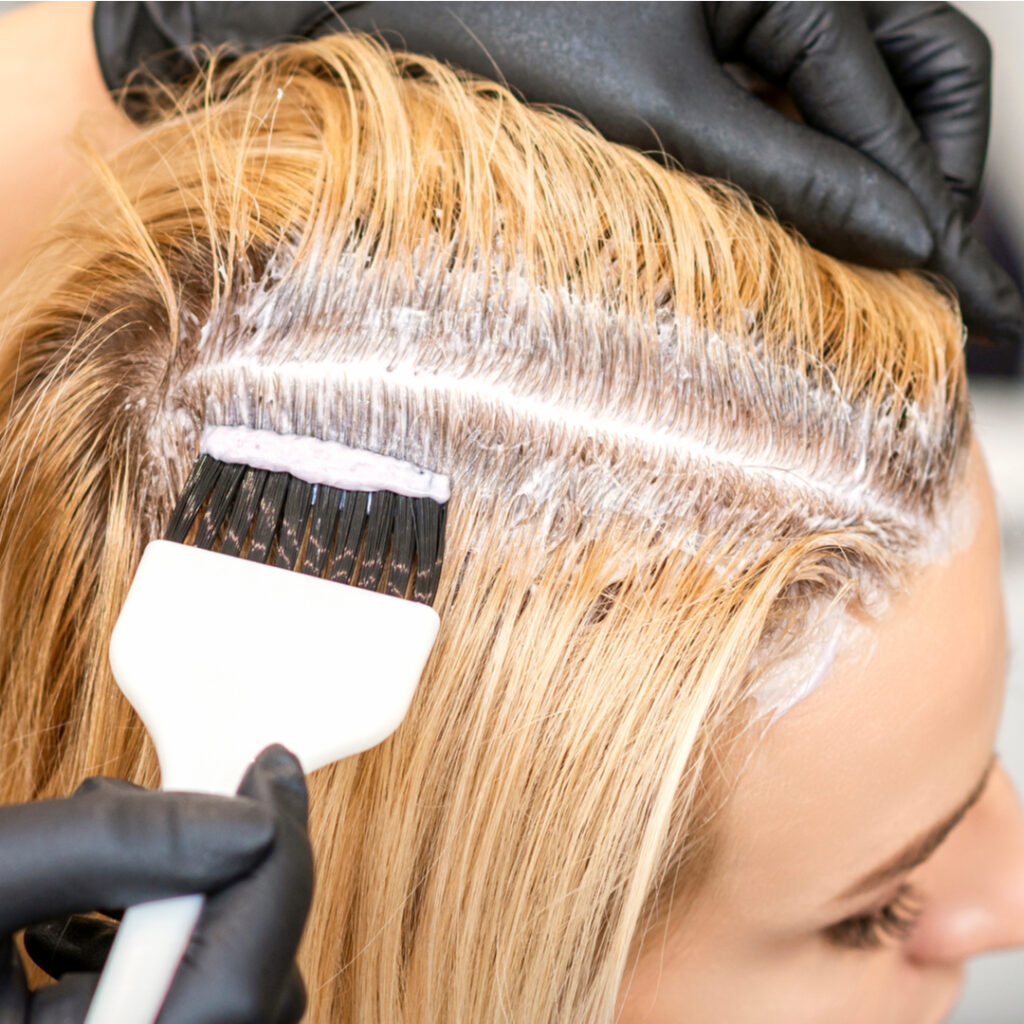
Repeated sectioning and brush movements, raised elbows and leaning towards the crown can load the upper limbs and back. Poor trolley placement creates hundreds of unnecessary reaches.
Backwash work
Shampooing can involve leaning, reaching and twisting, particularly when basin, chair and client position do not align. Wet floors add a different risk.
Extensions and specialist services
Detailed work can keep the neck bent and hands in a fixed pattern for long periods. Visual concentration may reduce awareness of posture and time.
Stock and laundry
Boxes, product deliveries, towel bags and equipment create lifting, carrying, pushing and pulling tasks that may be overlooked because they are not client services.
The risk is shaped by frequency, duration, force, posture, recovery and the individual—not the job title alone.
Stop treating pain as part of the profession
Salon language can prevent early action:
- “Everyone’s back hurts in this job.”
- “You get used to it.”
- “I’m fully booked, so I cannot take a break.”
- “That dryer is heavy, but it is powerful.”
- “I’ll deal with my wrist after Christmas.”
Normalising discomfort encourages people to report only when they can no longer perform a service.
HSE advises early reporting, appropriate treatment and suitable rehabilitation because not every musculoskeletal problem can be prevented. A supportive salon should make it ordinary to raise tingling, weakness, pain, swelling, restricted movement or persistent fatigue early.
Managers should not diagnose. They should listen, record the concern appropriately, review work risk and obtain competent occupational-health or medical advice where needed.
Audit the work—not only the worker
Telling a stylist to improve their posture can be useless if the chair will not rise high enough, the trolley is behind them and the diary contains four consecutive blow-dries without recovery.
A practical assessment examines:
| Element | Questions to ask |
|---|---|
| Task | What movements, forces and postures are required? |
| Duration | How long are they sustained and how often repeated? |
| Equipment | Is it adjustable, suitable, maintained and within reach? |
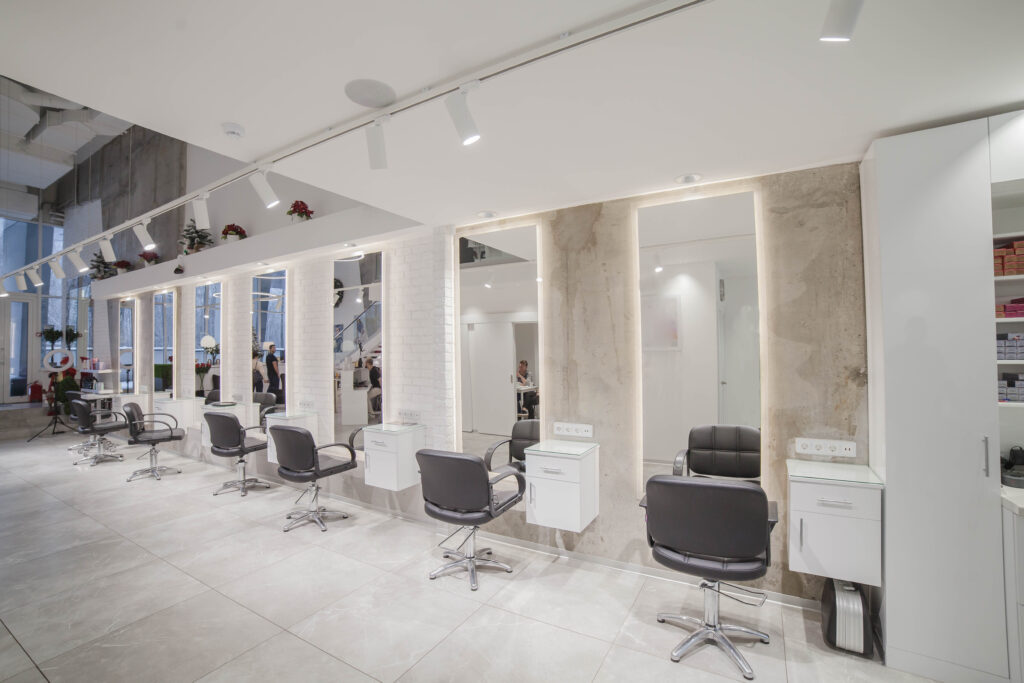
| Workstation | Can the stylist move around the client safely? |
| Diary | Does the day provide task variation and recovery? |
| Environment | Are lighting, heat, floors and space suitable? |
| Individual | Is there an injury, disability, pregnancy or other relevant need? |
| Organisation | Are breaks realistic or merely written into policy? |
Observe real work with consent. People often demonstrate an ideal technique when asked, then return to a different position once timing pressure resumes.
Set the client up before adapting your body
The client’s position should support the stylist’s work while remaining safe and comfortable.
Before starting:
- raise or lower the chair for the service area;
- ask the client to sit back and centrally;
- adjust their head with clear, respectful guidance;
- reposition yourself instead of twisting repeatedly;
- move around the chair where space permits;
- use a suitable stool for appropriate detailed work;
- change the setup as the service moves to another area.
Do not leave the chair at one height for convenience. A tall client and a small child create very different working relationships.
Explain repositioning professionally:
“I’m going to adjust the chair so I can work accurately without leaning over you.”
Clients usually understand when the reason is clear.
Bring tools into the working zone
A trolley is useful only when it prevents unnecessary movement.
Place frequently used items within easy reach and on the side that supports the current technique. Move the trolley as you move around the client. Avoid repeatedly stretching across a station or rotating to a surface behind you.
Review:
- scissor, comb and clip position;
- brush and dryer storage;
- colour bowl placement;
- cable management;
- product bottle height;
- access to foils and towels;
- secure storage of sharp and hot tools;
- whether the trolley rolls and locks correctly.
Organisation should reduce strain without introducing burns, contamination or trip hazards.
Choose tools using more than headline weight
A lightweight tool can reduce holding demand, but weight alone does not determine comfort or suitability.
Assess:
- balance in the hand;
- grip size and surface;
- switch position;
- vibration;
- cable length and drag;
- nozzle or attachment security;
- service duration;
- performance for the hair type;
- cleaning and maintenance;
- whether the tool encourages wrist deviation;
- the user’s hand size and technique.
Test equipment during representative work rather than holding it for thirty seconds at a trade stand. A poorly performing lighter dryer may extend exposure; a fast tool that is badly balanced may create another problem.
Scissors also need to fit the user and task. Seek competent advice rather than assuming one handle style or size prevents injury for everyone.
Change position before discomfort demands it
Variation can reduce the time spent in one demanding posture.
Practical changes may include:
- alternating standing and suitable seated work;
- changing which hand completes non-precision tasks where safe and trained;
- repositioning the client frequently;
- varying service types across the day;
- using short movement breaks between clients;
- avoiding repeated overreaching at the crown;
- preparing equipment before the service;
- using both sides of an adjustable basin where design permits.
Do not introduce technique changes that reduce control or service safety. Professional movement coaching or occupational-health input may be valuable where a problem persists.
Breaks must exist in the real diary
A policy saying “take regular breaks” does not help if appointments are booked continuously and every gap is used for cleaning, formulas, messages or a late-running client.
Review the schedule for:
- meal and statutory rest requirements;
- short recovery between physically demanding services;
- realistic cleaning and record time;
- variation rather than repeated identical appointments;
- late-running buffers;
- limits on exceptionally long specialist work;
- access to drinking water and toilets;
- cover arrangements.
Microbreaks are not a replacement for required rest, but brief opportunities to lower the arms, change position and release grip can form part of better work design.
The commercial question is not only, “How many clients can this column hold?” It is, “Can this person deliver the column safely and repeatedly?”
Look closely at the backwash area
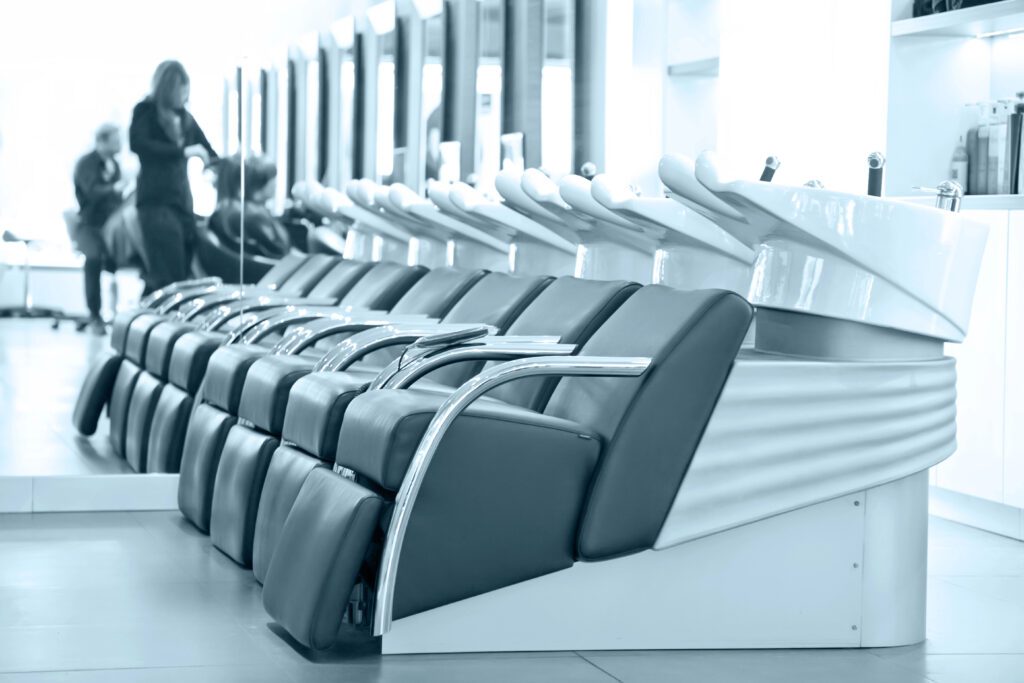
Backwash design can force poor positions if there is no room to approach, the basin height is unsuitable or supplies are stored beyond reach.
Check:
- approach space;
- basin and chair alignment;
- client neck comfort;
- adjustable features;
- floor dryness and footwear grip;
- shampoo and towel placement;
- hose reach and control;
- whether the stylist can move rather than twist;
- whether shorter and taller team members can work safely.
When replacing furniture, involve the people who use it. A beautiful basin that does not suit the team’s range of heights can create years of avoidable strain.
Manual handling belongs in the assessment
HSE defines manual handling broadly to include lifting, lowering, pushing, pulling, carrying and moving loads. It does not prescribe one universal safe weight limit.
Salon tasks may include:
- deliveries of colour and retail stock;
- moving furniture;
- lifting towel bags;
- handling water containers for mobile work;
- loading machines;
- moving boxes from floor-level storage;
- transporting portable basins or equipment.
Where hazardous handling cannot be avoided, assess and reduce the risk. Possible changes include smaller loads, delivery to the point of storage, trolleys, improved shelf height, team handling where suitable and removing obstacles.
Training alone does not correct a badly designed task.
Freelancers need a portable system
Mobile and session stylists cannot control every environment, but they can set minimum conditions.
Before a booking, ask about:
- chair and working height;
- space and lighting;
- electrical access;
- stairs and parking;
- distance equipment must be carried;
- water and basin arrangements;
- pets, children and trip hazards;
- breaks during group bookings;
- assistance with cases where appropriate.
Build the kit around safe transport and actual use. Wheeled cases, smaller containers and modular loads may help, but stairs and uneven access still need assessment.
Price travel, setup and recovery time honestly. A wedding morning containing several consecutive styles is physically different from one salon appointment and should be planned accordingly.
Self-employment does not make physical risk disappear. Freelancers must protect their own working capacity because illness or injury may immediately affect income.
Pregnancy, disability and health conditions need individual discussion
People experience the same task differently. Pregnancy, recovery from injury, disability, menopause symptoms, fatigue or a long-term health condition may change what support is effective.
Possible adjustments could include:
- equipment or workstation changes;
- different task allocation;
- extra recovery time;
- amended hours;
- seating;
- reduced lifting;
- temporary limits on particular services;
- occupational-health advice;
- a phased return.
Do not assume what someone needs or disclose health information to colleagues without an appropriate reason. Discuss the person’s work and barriers, consider legal duties, document agreed measures and review them.
Create an early-reporting pathway
Every worker should know:
- who to tell;
- how to report confidentially;
- what information will be recorded;
- what happens next;
- how work will be reviewed;
- when medical or occupational-health advice may be sought;
- how adjustments will be agreed;
- when the plan will be reviewed.
A manager’s first response matters. “We all ache” shuts down information. A better response is:
“Thank you for telling me. Let’s look at which tasks aggravate it and what we can change while you get appropriate advice.”
Serious or persistent symptoms should not be self-diagnosed from social media. NHS guidance explains when back pain needs routine, urgent or emergency assessment. Other symptoms require advice appropriate to their nature.
A 30-day hairdresser ergonomics reset
Days 1–7: listen and observe
- Ask the team where work feels physically difficult.
- Use a confidential body-mapping exercise if appropriate.
- Observe cutting, drying, colouring, backwash and stock tasks.
- Review accidents, absence and previous concerns.
Days 8–14: assess the system
- Check chair, basin, trolley and storage adjustability.
- Map repetitive services and insufficient breaks.
- Review manual handling and mobile equipment.
- Identify people who may need individual assessment.
Days 15–21: make practical changes
- Reposition frequently used supplies.
- Repair or replace faulty adjustment mechanisms.
- Improve diary variation and recovery time.
- Test suitable tools with the actual users.
- Provide role-specific training and supervision.
Days 22–30: measure and embed
- Ask whether the changes reduced difficulty.
- Record unresolved risks and responsible owners.
- Create an early-reporting route.
- Add ergonomic checks to new-starter induction.
- Set quarterly workstation reviews.
Build a simple salon body dashboard
Track trends without turning health information into a performance score.
Useful anonymous or appropriately protected measures include:
- tasks reported as difficult;
- body areas affected;
- time or service pattern associated with symptoms;
- workstation faults;
- missed or interrupted breaks;
- manual-handling concerns;
- adjustments requested and completed;
- sickness absence trends;
- follow-up dates.
Do not publish a league table of who reports pain. A strong reporting culture may initially increase recorded concerns because people finally feel safe to speak.
Conclusion: professional longevity is a business asset
Hairdresser ergonomics connects wellbeing with service quality, retention and profitability. A stylist working in pain may slow down, avoid particular services, need time away or leave the profession earlier than planned.
The solution is larger than posture. It includes adjustable workstations, suitable tools, realistic diaries, task variation, safe manual handling, early reporting and individual support.
Salon owners cannot prevent every musculoskeletal condition, and freelancers cannot control every venue. Both can stop treating pain as the unavoidable price of a successful career. Protecting the person who delivers the service is one of the most practical investments a hair business can make.
Featured-snippet answer
What is hairdresser ergonomics?
Hairdresser ergonomics means designing salon work around the person performing it. It includes client and chair height, tool placement, equipment balance, posture variation, diary design, breaks, manual handling and individual adjustments. The aim is to reduce avoidable physical strain while maintaining safe, high-quality services.
Frequently asked questions
1. Why do hairdressers experience back and shoulder pain?
Hairdressing can involve prolonged standing, bending, reaching, raised arms, repetition, gripping and limited recovery. Symptoms have many possible causes, so work risks should be assessed and medical advice sought when appropriate.
2. What is the best posture for a hairdresser?
There is no single position to hold all day. Adjust the client, keep work close, avoid prolonged twisting and change position regularly. Individual assessment may be needed for persistent difficulty.
3. Should a stylist sit while cutting hair?
Suitable seated work can add helpful variation for some techniques and people. The stool, client height, space and task must allow safe control and movement.
4. Does a lightweight hairdryer prevent injury?
Not by itself. Weight, balance, grip, vibration, performance, service duration and technique all matter. Test tools during representative work before deciding.
5. How often should hairdressers take breaks?
Salons must comply with applicable rest requirements and assess the demands of the work. Short recovery opportunities and task variation may help, but they do not replace proper meal or statutory breaks.
6. Can a salon owner ask about a worker’s pain?
Managers can discuss how work affects the person and what support may help, while handling health information confidentially and lawfully. They should not diagnose.
7. What should a freelance hairdresser do about ergonomics?
Assess each venue, set minimum workspace conditions, plan safe equipment transport, price setup time and avoid accepting a schedule that cannot be delivered safely.
8. Is there a legal maximum weight for manual handling?
HSE states that the law does not set a single weight limit. Employers should avoid hazardous handling where reasonably practicable, assess unavoidable tasks and reduce risk.
9. When should a hairdresser seek help for back pain?
Use current NHS guidance. Seek medical advice when pain persists, affects daily activities, causes concern or has warning symptoms. Sudden severe symptoms or neurological changes can require urgent or emergency help.
10. How often should a salon review ergonomic risks?
Review regularly and whenever equipment, layout, services, staffing or an individual’s needs change. Concerns, injuries and near misses should trigger an earlier assessment.